
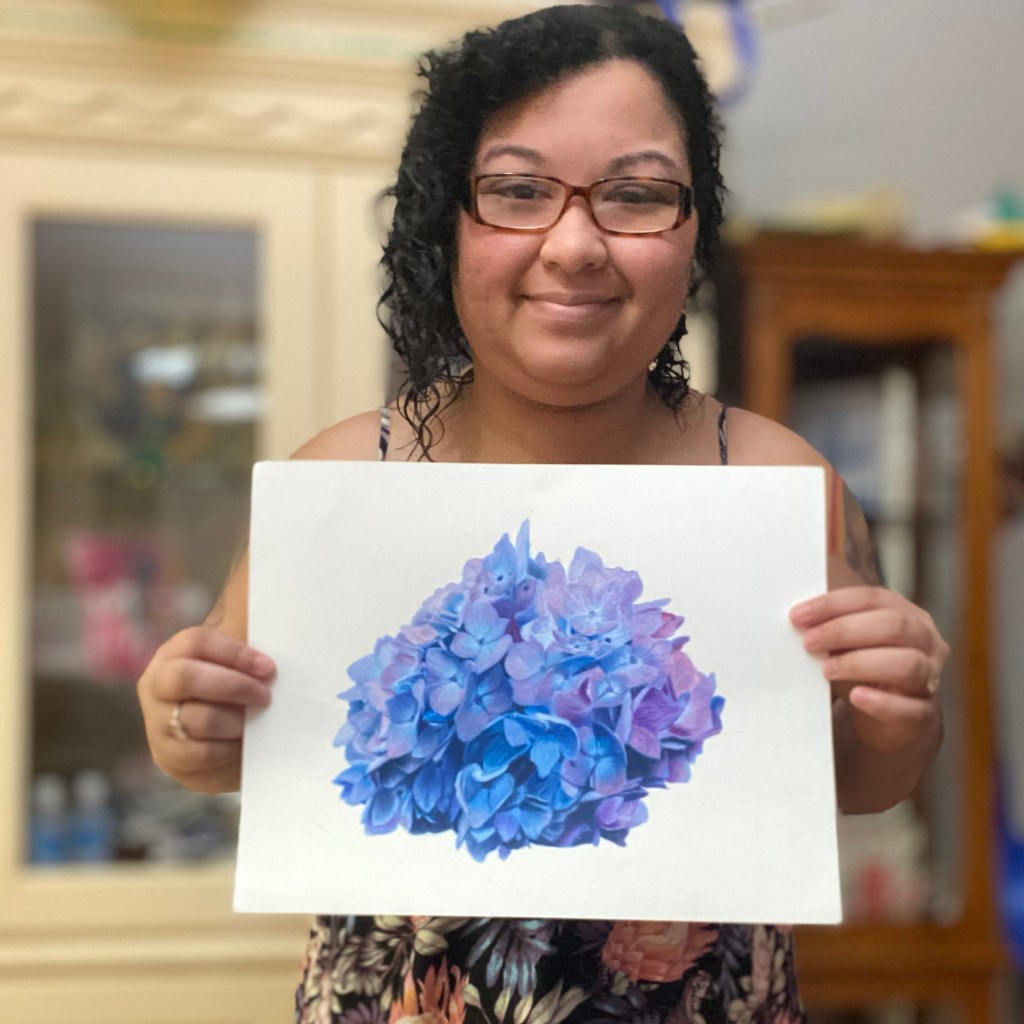
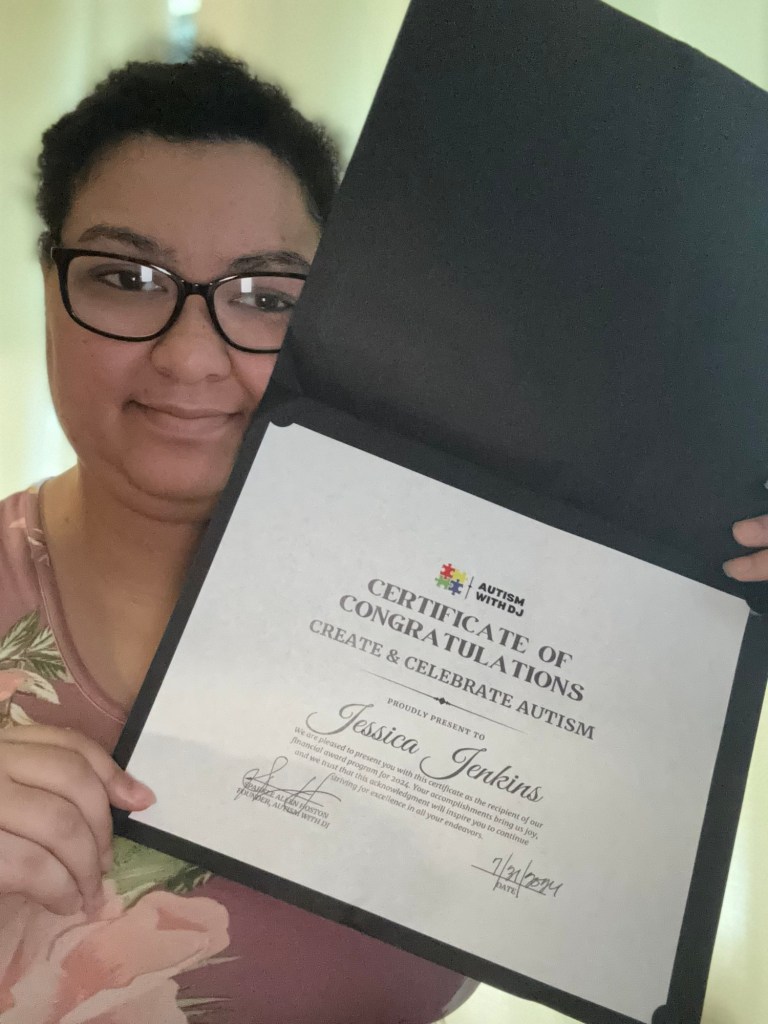
I was non verbal until the age of 10. But even after that, words were still hard to retrieve and I still have a hard time producing words, as well as processing verbal information. My brain doesn’t retain verbal information but I do very well with visuals. I’m a hybrid mouth speaker who experiences verbal shutdowns and am unable to speak so I’m a part time AAC user. I think in pictures and it’s hard to translate that into words so I mainly use my art as a form of communication even if others don’t understand it. I still communicate using immediate and delayed echolalia because I’m a gestalt language processor. And while it may not be so obvious to others around me, because I have learned to produce original sentences with my scripts, I still find that it creates a barrier when I’m trying to communicate with other people who don’t understand my scripts. These are some of my communication deficits that I can’t mask and have no control over. I want people to know that just because I’m verbal now, that doesn’t mean I have zero communication deficits. I want people to know that just because I’m verbal, that doesn’t mean I don’t need AAC to communicate. I also want people to know that just because I’m verbal, that doesn’t mean I’m high functioning. And while I can speak and use my words, that doesn’t mean I’m always able to self advocate. I do believe there’s a lot of misinformation circling around on social media that may be contributing to the lack of knowledge about autism and the different levels of communication deficits. There’s not enough representation of the true deficits that many autistic people have so I can’t really blame people who don’t know it because they don’t have exposure to it. I just really wish more people understood.
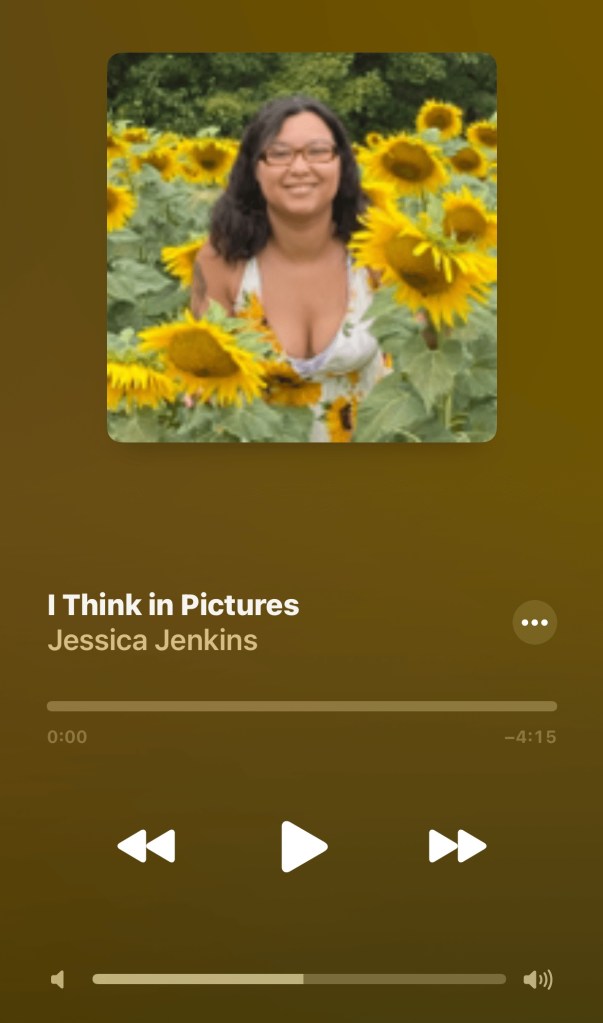
As someone who is autistic and an artist, I really wanted to write a song that describes my experience with my communication deficits. I wanted to give a clear explanation for how my artistic abilities really manifested. My art isn’t just a talent. My art is deeply rooted within my experience as formerly being non verbal. Out of desperation to have a voice that took me 10 years to find, I started drawing my thoughts in hopes that it would be recognized as valid form of communication. I felt so much pressure to use my words even when I didn’t have access to it and even when I managed to get my thoughts on paper, nobody cared because I wasn’t using my words. “I Think in Pictures” conveys the struggles of not having words but having thoughts in the form of pictures and how the world still doesn’t have an understanding on how different someone like me communicates. I always tell people I can draw it better than I can tell you. When I can’t find the words, I have pictures in my head that I like to draw to express what I’m thinking. With this song, I’m hoping to offer a better understanding of this and a different perspective that for many years was so hard for me to put into words and I’m also trying to give little me the voice she never had. I really hope you all enjoy listening to my song. It’ll mean the world to me if you all download it and share it with your friends and family. This song means so much to me and I’m so proud of it. I also have another song coming out soon so keep a watch out for it.
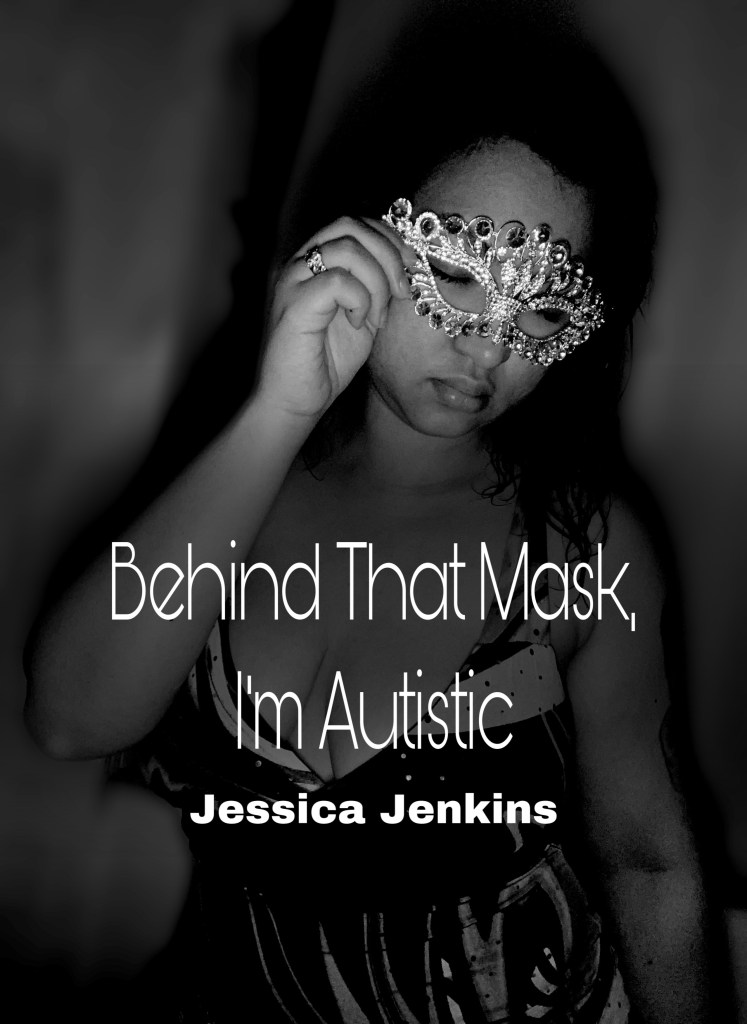
I’m so happy to announce my autism autobiography/personal memoir is officially published and available now on Amazon. This intimate book of mine goes into detail about what it was like growing up autistic and the transition into adulthood.
I started working on this book immediately after I released my autism poetry book. I’m really excited about this book and worked really hard on it. If you decide to order a copy, please leave a review on it. It’ll mean the world to me!
DISCLAIMER: this book depicts my personal life experience and I don’t claim to speak for the entire autism community.
I struggle with maintaining friendships and the biggest reason is because I’m too busy for friends. But I don’t mean busy as in not having time to be a good friend or to be there when they need me. I’m a really good friend. I am very passionate about friendships I do make and I feel connections very deeply. When I say I’m too busy, I mean I’m too busy isolating myself in a dark room because social interactions overstimulate me and cause me to shut down. I’m too busy wanting to be alone because it’s more predictable. I’m too busy cocooning myself in my sensory swing to stay calm. I’m too busy sorting some of my sensory toys to help organize my racing thoughts and keep myself from having a meltdown. I’m too busy being frozen in place because transition and initiation of tasks is very difficult for me. I’m too busy melting down because I can’t always keep myself together. I’m too busy balancing between under-stimulation and overstimulation and trying to find a middle ground. I’m too busy giving myself squishies and smacking my belly and thighs because I feel like I’m floating away. I’m too busy crying because I feel like a burden when my friends make a big deal about me being distant. I’m too busy repairing and healing the traumatized autistic little girl within me who grew up abused and neglected. I’m too busy teaching myself how to communicate in other ways when I suddenly lose my ability to speak because I never received speech therapy as a child. I’m too busy trying to follow a schedule and routine and by the end of the day, I’m too drained to commit to anything else. I’m too busy covering my ears because this world is too loud. I’m too busy with my special interests because it’s the only consistent thing in my life and I don’t want to disrupt that. I’m too busy giving my autistic children everything they need and getting emotional because it’s everything I never had. To all my friends, I’m sorry I can’t always be present because I’m too busy being autistic.
I wanted to share with you what it’s like being autistic and also suffering with body dysmorphia
I hate my eyes but I’m not talking about the color. I’m talking the absence of sparkle. That sparkle was stolen by society that keeps telling me how I see the world is wrong.
I hate my smile because it’s a reminder of having to mask my happy flappy hands because society prefers quiet hands.
I hate the way I walk because society says it’s not “sexy” enough. I’m very clumsy and bump into things because I lack body awareness and I have poor posture.
I hate my body because society made me feel like my hanging belly, stretch marks and sagging breasts is ugly. I look in the mirror and pick apart everything and I cry because I’m disgusted.
I’ve spent all my life internalizing everything society sees as a flaw. But thinking about it on a deeper level, I now recognize that I actually don’t hate myself. I hate the person that I have become to protect who I really am. I hate that I’ve chosen to put myself down because it’s easier to tolerate hate from myself than to cry about the rest of the world hating me. I hate that I’ve had to mask a lot of my autistic traits so that I was protected from abuse. My fatal flaw is perfecting everything I do so the world has less of a reason to bully me.
As part of my self healing journey, I’m trying to find myself again and take back that power to love myself no matter what people think or how people feel about me.
I was 4 years old when I first learned that my happy flappy hands were “inappropriate”. I was in class and the teacher said it was snack time and I happily flapped my hands and giggled. She placed her hands on my hands and set them down on my lap and whispered “that’s not how we act”.
I didn’t have verbal speech fully mastered yet but I did speak loud and clear with my body. I would bite others when I didn’t want to be touched, I would bang my head when I was overstimulated and I would flap my hands when I was happy. But I still don’t understand why it was so wrong for me to express my happy emotions. Why do I have to suppress my happy stims? Why does it make others so uncomfortable to see me happy? Why isn’t the world more accepting of different forms of expression? I hear professionals pushing the “quiet hands” nonsense and I get sick to my stomach.
As an autistic adult who took all my life to learn to embrace my autism, after spending most of my life having people tell me the way I function is wrong, I want to be the one to tell the next generation of autistic children that it’s ok to flap your hands. It’s ok to be happy and to express it in a way others aren’t used to. It’s ok to flap those hands as much as you want until you feel enough of that happy energy has been released. I understand that regulating emotions is sometimes complicated and even happy emotions are considered BIG emotions. We regulate it the best way we know how and please don’t let the world stop you. Being happy and showing it is not a bad thing. It only means you experience it in a much profound way than anyone else and that’s a very beautiful thing, to be able to feel immense happiness. You don’t need to contain it. It’s a beautiful thing to hand flap happily over the smallest things in life that others take for granted. Happy flappy hands are so pure and beautiful and I hope that someday everyone else can see it the same way I do.
 Jessica's Blooming Brain